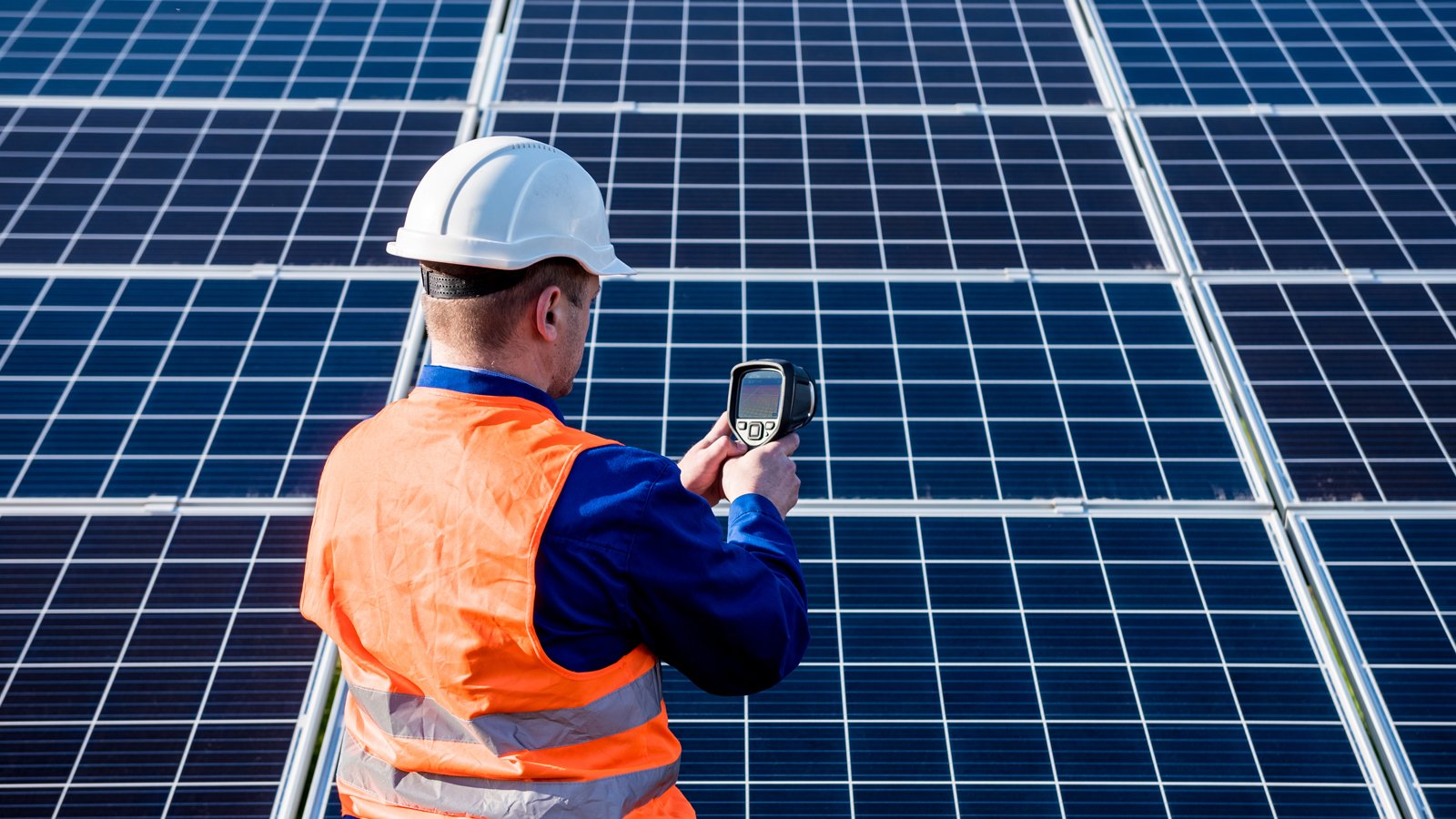

An increasing number of solar panels are decommissioned prematurely as a result of system upgrades and repowering. Some of these modules may be suited for reuse.
On EnergyBin, there’s been an uptick in used modules for resale that were in operation for 15 years or less. But age alone is not enough to determine whether decommissioned modules should be reused. Rather, adequate testing is necessary to make an informed decision.
Testing takes the guesswork out of the equation, allowing resellers to guarantee their offerings. Don’t assume that just because solar panels are used that they’re at end-of-life. They may still have useful life in them, which is only determined by properly testing them.
Beyond useful life, testing concludes whether decommissioned modules are safe for reuse. Testing for safety greatly contributes to buyer confidence as well as the integrity of the secondary market.
This article summarizes three tests recommended for performance and safety – I-V curve, electroluminescence (EL) imaging, and wet leakage (WL) testing. It also suggests reporting practices to accompany resale listings.
Three tests that matter
Researchers agree that three tests are critical to assess whether decommissioned solar panels should be offered for resale: current voltage (I-V) curve, electroluminescence (EL) imaging, and wet leakage (WL) testing.
Results from these three tests will not only determine a module’s functional performance but also if it’s safe for reuse as well. Testing should occur after initial inspections rule out those modules that have encapsulant failure, glass breakage, junction box failures, metal corrosion, or burn spots. Modules with any of these defects should be recycled.
I-V Curve Analysis
I-V curve analysis provides a robust account of electrical performance to estimate residual life. It essentially measures the relationship between the electrical current and the voltage of the module.
This test can easily be done in the field. For example, Fluke sells an I-V field tester that captures irradiance and temperature, normalizes measurements to STC, compares measured curves against expected curves, highlights deviations, and logs data for reporting and trend analysis.
I-V curve testing gives a true performance loss rate (PLR), which is a critical measurement for determining whether a module should be offered for resale. Although there is no universal PLR, some researchers recommend at least 70% of the PV module’s original nominal power. Others have set an acceptable power output of 80% or higher of the nameplate power.
EL Imaging
EL imaging captures spatial and structural defects, such as cracks, inactive regions, and non-uniform current pathways. Field exposure can cause a variety of wear-and-tear issues including backsheet cracking, pinholes, delamination, and erosion. These issues lead to moisture ingress and create leakage pathways that compromise the electrical safety of the module.
What EL imaging does is provide a direct current to the PV module and then measures the photoemission by means of an infrared-sensitive camera. IEA-PVPS Task 13 has published several requirements for running proper EL imaging tests, such as camera requirements and recording procedures, and the International Electrotechnical Commission (IEC) has published pass/fail standards to support the testing of aging modules, most notably 61215 and TS 62446-3. The IEC is further expected to publish new standards on the reuse of PV modules within a circular economy framework (PAS 63525 ED1) later this fall.
EL has also been proven successful in detecting bypass diode faults. When a reverse bypass is conducted via EL testing, the results show either an infrared radiation or a dark spot, signaling an inactive or defective region. The dark regions can be corrected with non-destructive, field applicable plug-in repair protocol that removes diode-induced leakage pathways.
WL Testing
Wet leakage (WL) testing is highly recommended for decommissioned modules following I-V curve evaluations and EL imaging. WL testing is the most reliable method for assessing module safety performance, which is necessary to counter the perception that second-life modules are unsafe.
WL has historically been time-consuming and resource-intensive; however, a recent mass-scale reuse pilot field test in Australia has modified WL protocol to reduce testing time to 5 minutes per module.
The modification simply tests two modules at a time, both connected to the same 1,000 V source. The combined leakage current and module area are then assessed per the existing IEC safety protocol without lowering the required threshold. The pilot program in Australia identified an additional 15% of tested modules failed to meet WL safety requirements. Modules that fail WL testing should be recycled.
Reporting test results
Taking the time to conduct sufficient testing, either in the field or in a lab environment, is a sure-fire way to determine which decommissioned solar panels should be reused and which should be recycled. Sufficient testing comprises all three recommended tests – I-V curve, EL imaging, and WL testing – to measure both performance and safety levels.
For modules that pass reuse thresholds, it’s important to provide report documentation. Transparency leads to buyer confidence. On EnergyBin, it’s recommended that resellers attach test results to their inventory listings. Doing so enhances their credibility as reputable resellers.
Include the following in a testing report:
- Serial numbers of modules
- Nameplate electrical parameters
- Bill of materials
- Photos
- Tests performed
- Test results
When clearly reported, test results establish buyers’ trust in the safety, reliability, and residual performance of second-life modules.
Adopting this process contributes to the integrity of the secondary market and maximizes the lifespan of modules.
More Resources
 PV Hardware Resale: Turning Excess Inventory into Opportunity
 Global Solar Panel Resale Poised to Take Off Despite Challenges