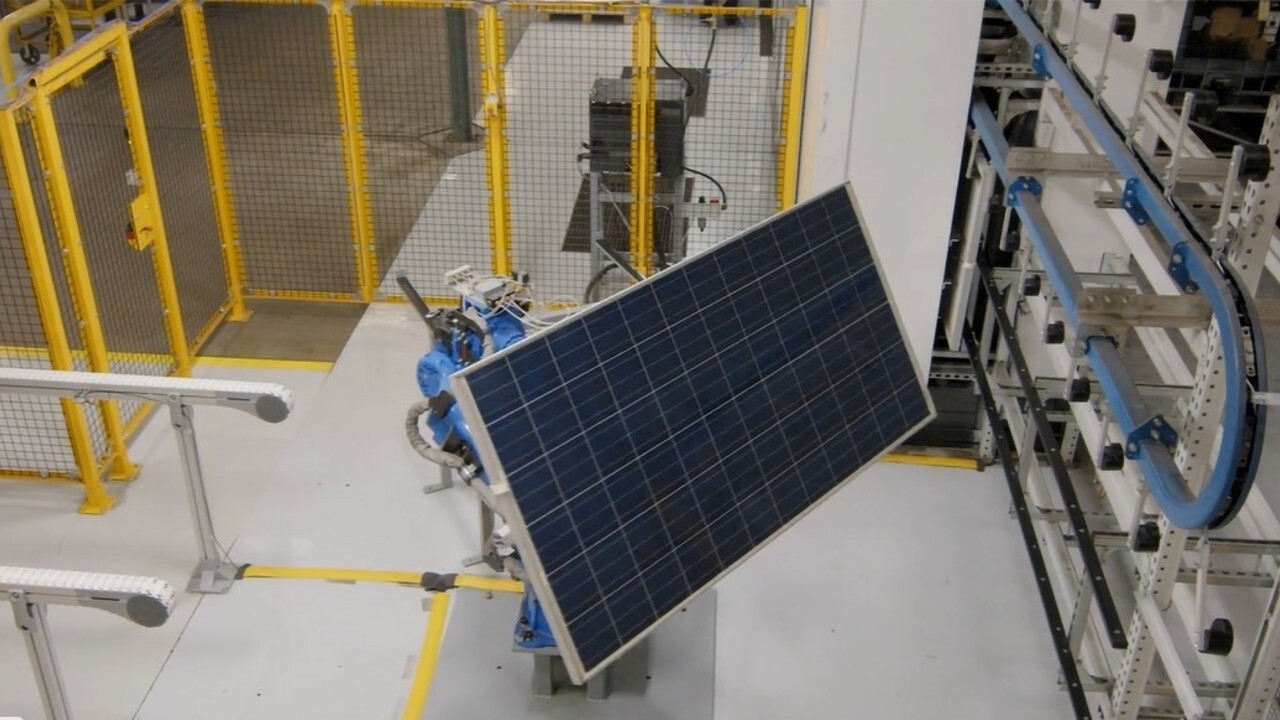

As the solar industry enters a new era of repowering and decommissioning, TERREPOWER is challenging the assumption that retired panels should automatically be recycled. The company’s approach to sustainable remanufacturing goes far beyond cleaning and repackaging: each asset is inspected, performance-tested, repaired when viable, retested, and validated before returning to service. By using data to determine whether panels should be reused, remanufactured, sold into the secondary market, or responsibly recycled, TERREPOWER helps extend product life, preserve embedded materials and energy, protect buyer confidence, and recover greater value from existing solar equipment.
We interviewed TERREPOWER to learn more about the company’s data-driven remanufacturing process. TERREPOWER has been an EnergyBin member since 2017.
EB: Tell us about TERREPOWER. Give us a brief history. When and why did the company expand into solar?
We have been a sustainable manufacturer since 1987, beginning with the remanufacturing of automotive components. Over the years, we have brought that same proven approach to new markets: preserve the value of existing products through disciplined testing, remanufacturing, and responsible recirculation. Solar was a natural extension of that experience. As the industry grew, we saw an increasing need for scalable solutions for excess inventory, repowering, decommissioning, and end-of-life management. We believe panels and inverters should be carefully evaluated before they are designated for resale or recycling. Our solar business was previously known as Ontility, and bringing it under the TERREPOWER brand allowed us to combine that established solar expertise with our broader sustainable manufacturing capabilities and global scale.
EB: What experience supports TERREPOWER’s work in the solar industry?
We bring together decades of sustainable manufacturing experience with hands-on expertise in solar lifecycle management, business development, project management, asset recovery, and secondary-market solutions. We work closely with asset owners, utilities, EPCs, developers, manufacturers, and other industry partners to recover value from solar equipment without compromising quality. Before we recommend a path forward, we take time to understand the equipment, project history, operational requirements, and business objectives. That allows us to build a strategy around the actual condition and performance of the assets, rather than relying on assumptions.
EB: What are TERREPOWER’s goals for its solar division?
Our goal is to be the solar industry's trusted lifecycle partner and to help make disciplined evaluation, remanufacturing, reuse, and responsible recycling standard practices rather than afterthoughts. As repowering and decommissioning activity grows, we encourage customers to begin lifecycle planning earlier. Early engagement gives us more opportunities to preserve documentation, protect equipment, assess marketability, and consider every viable pathway, including reuse, remanufacturing, secondary-market sale, and recycling. As we scale, we remain committed to quality. Every panel and inverter approved for recirculation must complete the appropriate inspection, testing, and validation process.
EB: What sets TERREPOWER apart from the competition?
What sets us apart is that we do not consider washing panels and re-palletizing them to be remanufacturing. Every panel and inverter entering our remanufacturing program must complete the appropriate inspection, performance testing, grading, repair, and validation process before we approve it for recirculation. Our philosophy is simple: every asset must earn its next destination through data. If a product meets the applicable quality and performance standards, we prepare it for its next phase of use. If it does not, we will not return it to the market simply to make a sale. We also evaluate multiple pathways, including reuse in the product's current condition, repair or remanufacturing, placement in an appropriate secondary market, or responsible recycling. This quality-first approach protects our customers, strengthens confidence in the secondary market, and supports our position as the World's largest sustainable manufacturer by volume.
EB: What solar lifecycle solutions does TERREPOWER offer?
We provide an integrated lifecycle platform for solar panels, inverters, and related equipment. Depending on the project, our work may include inventory review and asset identification, decommissioning and logistics coordination, visual and component inspection, flash or other performance testing, EL imaging when appropriate, cleaning, grading, repair, remanufacturing, retesting, quality validation, secondary-market placement, and responsible recycling and disposition reporting. The sequence matters. Cleaning and re-palletization are important packaging and preparation steps after evaluation, but they are not substitutes for performance testing or remanufacturing. We help each customer consider the available pathways and select the option that best preserves value, supports sustainability goals, and manages project risk.
EB: How does TERREPOWER determine which panels should be reused versus recycled?
Every project is different, so we begin by understanding the equipment mix, operating history, environment, failure mode, and reason for decommissioning. We review the available records and inspect relevant components, including the glass, frame, backsheet, junction box, leads, wiring, and connectors. We then use performance testing to measure actual output and determine whether further evaluation is needed. Flash testing is a primary tool, while EL testing may be applied to a sample or used for deeper investigation when the project findings call for it. That data helps us determine whether panels can be reused, need repair or remanufacturing, are suitable for a secondary-market application, or should be responsibly recycled. We evaluate the specific equipment before providing a recovery estimate because the right answer should be based on evidence, not assumptions.
EB: Why should customers consider second-life solar panels?
We encourage customers to look beyond a panel's age or the fact that it was removed from its original installation. What matters is its verified condition, performance, documentation, application requirements, and total project economics. For the right application, a properly inspected, tested, remanufactured, and validated second-life panel can be both a cost-effective and sustainable solution. Keeping qualified equipment in productive use preserves value, extends useful life, and helps avoid premature recycling. In our view, second-life does not mean second-rate when the product has completed a rigorous, data-driven evaluation and has been qualified for its next phase of use.
EB: What does TERREPOWER’s remanufacturing process involve, and how is it sustainable?
For us, true remanufacturing is a quality-driven process. We begin with intake and inspection, review the panel or inverter and its components, conduct the appropriate performance testing, identify any repair or remediation needs, complete qualified repairs when viable, and then retest the product. Only equipment that meets our requirements is prepared for remarketing or redeployment. This approach is sustainable because it extends useful product life while protecting customer confidence. It preserves the materials and energy already invested in the product, reduces premature waste, and ensures recycling is used when a higher-value pathway is no longer appropriate. If a product does not meet the applicable requirements, we remove it from the recirculation pathway rather than return it to the market.
EB: Does TERREPOWER offer a warranty on remanufactured modules?
Yes, warranty options may be available for qualified remanufactured modules that successfully complete our required inspection, testing, remanufacturing, and validation process. Coverage depends on the product, test results, project requirements, and applicable commercial terms. What gives the warranty meaning is the assessment and quality process behind the product, not simply its appearance after cleaning. Our intent is to give customers confidence that approved equipment has been carefully evaluated, remanufactured where needed, and validated for its intended next application.
EB: Can you share examples of how TERREPOWER determines the right path for solar panels?
Certainly. In one case, we acquired a batch of PV modules for potential remanufacturing and resale. At first glance, the modules appeared suitable for reuse. However, our advanced diagnostic testing uncovered extensive microcracking and cell damage that could not be seen with the naked eye. Because the modules did not meet our quality and performance standards for redeployment, we rejected them for resale and responsibly processed them through our recycling operations. We would rather walk away from a sale than put an imperfect product back into the market.
In another case, a project partner initially believed that every panel removed during decommissioning would need to be recycled as part of a larger repowering effort. After evaluating the equipment, we identified several viable pathways. Some panels could be remanufactured and returned to productive use, others qualified for sale through the secondary market, and only those that did not meet the required standards were directed to responsible recycling. By avoiding a recycle-all approach, the partner preserved more value from the existing equipment and achieved substantial savings that helped offset the repowering cost.
These examples capture how we approach lifecycle management: we do not automatically resell or recycle. We use data to determine the safest, highest-value, and most sustainable path for each asset.
Bottom line: Before recycling, evaluate every pathway. The right decision begins with data.
A special thanks…
 To TERREPOWER for sharing about sustainable solar panel remanufacturing.
More Resources
 A Comprehensive Guide to Wholesale Solar Equipment Brokering
 The Latest in Decommissioned PV Module Testing Recommendations