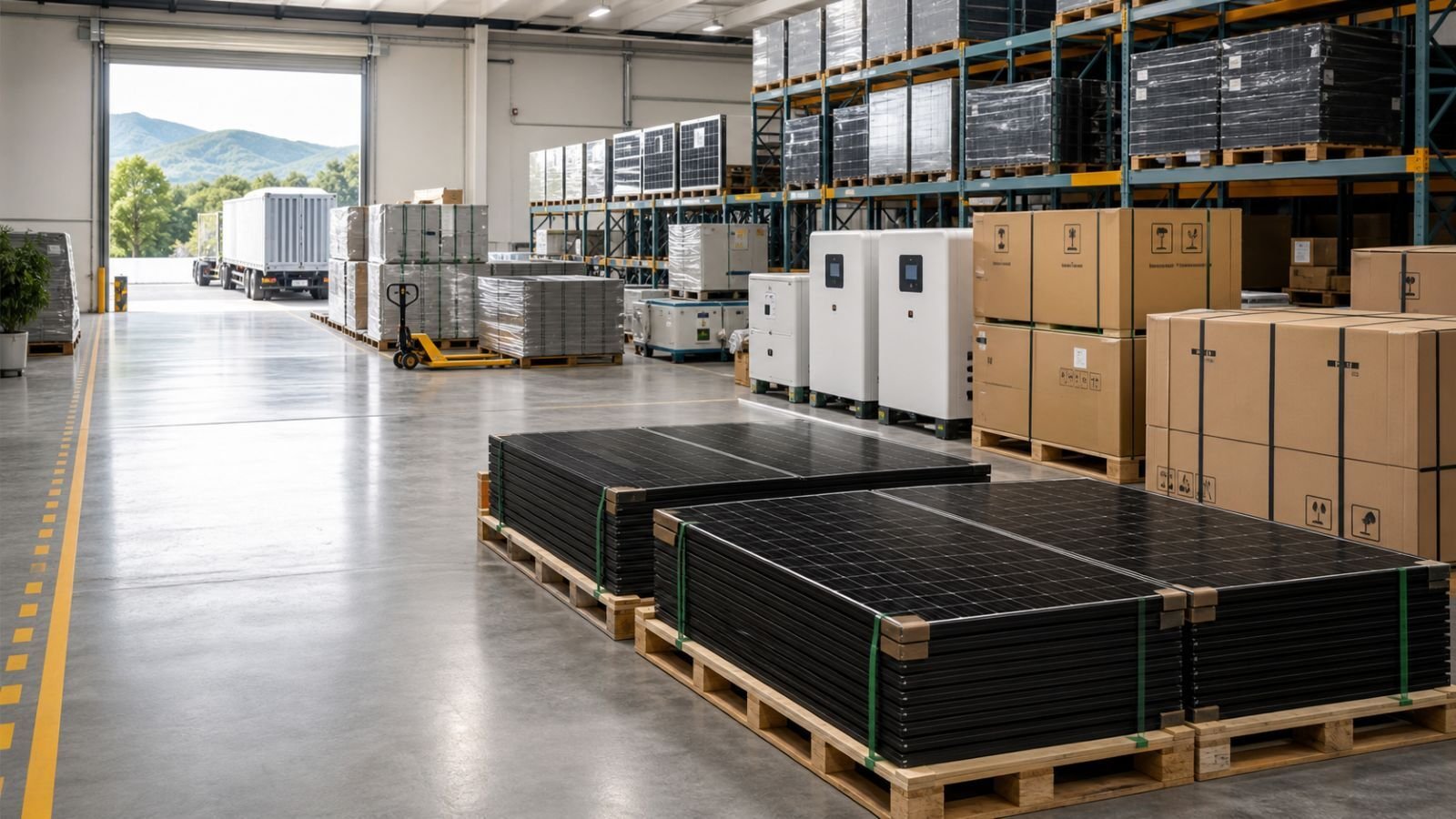

Discover how solar industry professionals are transforming excess photovoltaic inventory from a financial burden into strategic profit opportunities through the secondary market.
The hidden cost of excess solar inventory
Solar industry professionals face a persistent challenge that extends far beyond the initial procurement of photovoltaic equipment. Excess inventory—whether resulting from project delays, specification changes, discontinued product lines, or overstock situations—carries substantial financial implications that compound over time. Storage costs, insurance premiums, warehouse labor, and capital tied up in non-moving assets create a cascading burden on operating margins and cash flow.
The depreciation curve for solar equipment is particularly steep in today's rapidly evolving market. As manufacturers release higher-efficiency modules and more advanced inverter technologies, older inventory loses value quickly. This depreciation isn't merely theoretical; it directly impacts balance sheets and reduces the return on investment for solar companies holding excess stock. For distributors and EPC firms alike, unplanned inventory accumulation can transform what should be liquid assets into financial liabilities.
Beyond the quantifiable costs, excess inventory creates operational inefficiencies that affect project execution and competitive positioning. Warehouse space occupied by non-moving stock could be utilized for high-turnover products. Additionally, the administrative burden of managing, tracking, and attempting to liquidate excess equipment diverts resources from core business activities. Understanding these hidden costs is the first step toward implementing strategic asset recovery solutions that transform inventory challenges into opportunities for value recapture.
Strategic asset recovery through secondary markets
The secondary market for photovoltaic equipment has evolved from an informal network of ad-hoc transactions into a sophisticated channel for strategic asset recovery. Solar professionals are increasingly recognizing that excess inventory represents recoverable value rather than sunk cost. Through specialized B2B exchanges, like EnergyBin, designed for the solar industry, wholesale sellers can access pre-qualified buyers actively seeking new, used, refurbished, and excess equipment at competitive prices.
Strategic asset recovery extends beyond simple liquidation. It encompasses a systematic approach to inventory management that identifies non-moving assets early, evaluates market demand for specific product categories, and positions equipment for optimal value recovery. This approach recognizes that different inventory types—from discontinued modules to overstock balance-of-system components—require tailored strategies to maximize returns. The key lies in connecting with buyers who specifically need those products, whether for replacement parts, smaller projects, or cost-sensitive installations.
The timing of asset recovery decisions significantly impacts value realization. Equipment that sits in storage for extended periods loses value both through technological obsolescence and market perception.
By engaging with secondary markets proactively, solar companies can recover 20-70% of retail value on excess inventory, freeing up capital for new opportunities while minimizing depreciation losses. This strategic approach transforms inventory management from a reactive cost center into a proactive value driver that contributes to overall profitability and operational efficiency.
Maximizing value through transparent pricing intelligence
One of the most significant challenges in the secondary PV equipment market has historically been the lack of transparent pricing information. Unlike primary markets where manufacturer suggested retail prices provide benchmarks, secondary markets have operated with limited visibility into fair market values. This opacity creates inefficiencies for both buyers and sellers, leading to missed opportunities and suboptimal pricing decisions.
Access to comprehensive pricing intelligence fundamentally changes the dynamics of secondary market transactions. When sellers can reference historical pricing data across thousands of part numbers, they gain the confidence to price competitively while maximizing value recovery. This data-driven approach removes the guesswork from liquidation decisions and enables informed negotiations based on actual market activity rather than speculation. For buyers, pricing transparency ensures they're obtaining genuine value while paying fair market rates for the equipment they need.
Market intelligence extends beyond simple price points to encompass availability trends, demand patterns, and technology-specific valuations. Understanding which modules, inverters, or racking systems are in high demand enables sellers to prioritize their liquidation efforts strategically.
Similarly, buyers can leverage this intelligence to identify market opportunities and source equipment when pricing conditions are favorable. The combination of transparent pricing and comprehensive market data creates an efficient marketplace where transactions occur at mutually beneficial terms, supported by objective information rather than asymmetric knowledge.
Building sustainable supply chains in the PV industry
Sustainability in the solar industry extends beyond the clean energy produced by photovoltaic systems to encompass the entire lifecycle of equipment. As the first generation of large-scale solar installations approaches end-of-life, the industry faces a critical juncture: either develop robust reuse and recovery channels or contribute to growing electronic waste streams. The secondary market plays an essential role in building circular economy principles into PV supply chains.
Reusing and refurbishing solar equipment delivers measurable environmental benefits while supporting economic objectives. High-quality modules decommissioned from one project may serve effectively in another application for years or decades.
Components that no longer meet the performance requirements of utility-scale installations can find second lives in residential or commercial systems. This cascading use model maximizes the embodied energy and materials in PV equipment, reducing the environmental footprint of solar energy deployment while expanding access to renewable energy technology.
Building sustainable supply chains requires infrastructure that connects decommissioned equipment with new applications efficiently. This includes not only marketplaces for trading equipment but also value-added services such as testing, certification, repair, and logistics support. When solar professionals can rely on tested, warranted refurbished equipment backed by service providers, the barrier to adopting secondary market products decreases significantly. The result is a more resilient, cost-effective, and environmentally responsible supply chain that serves the industry's long-term interests while advancing broader sustainability goals.
Connecting pre-qualified buyers and sellers for efficient liquidation
The efficiency of secondary market transactions depends critically on the quality and reliability of marketplace participants - a key reason why EnergyBin is an exclusive exchange of vetted solar professionals.
Generic online platforms open to any seller or buyer introduce risks related to product authenticity, transaction reliability, and professional standards. For solar industry professionals managing significant inventory values and project timelines, these risks are unacceptable. Pre-qualification of marketplace participants addresses these concerns by creating a trusted environment where vetted companies can transact with confidence.
EnergyBin's pre-qualification process verifies that participants are actively engaged in the solar industry, maintain appropriate business credentials, and adhere to professional standards of conduct. This vetting eliminates fly-by-night operators and establishes a baseline of credibility that facilitates efficient transactions. When sellers list equipment, they can be confident that inquiries come from legitimate buyers with genuine purchasing intent and the capability to complete transactions. Conversely, buyers know that sellers will honor quoted prices, provide accurate product descriptions, and fulfill commitments professionally.
The network effect of connecting pre-qualified professionals creates exponential value for marketplace participants. A solar distributor seeking to liquidate excess inverters gains access to hundreds of qualified buyers, dramatically increasing the probability of finding the right match quickly. An EPC firm needing replacement parts for a legacy system can tap into a network of suppliers who may have exactly those hard-to-find components in stock. This efficient matching reduces the time and effort required for both buying and selling, enabling solar professionals to focus on their core business activities while confidently leveraging the secondary market as a strategic resource for both procurement and asset recovery.
More Resources
 Solar Equipment Brokers Bring Cost-Saving Benefits to Buyers
 How to Sell Excess PV Hardware on EnergyBin